

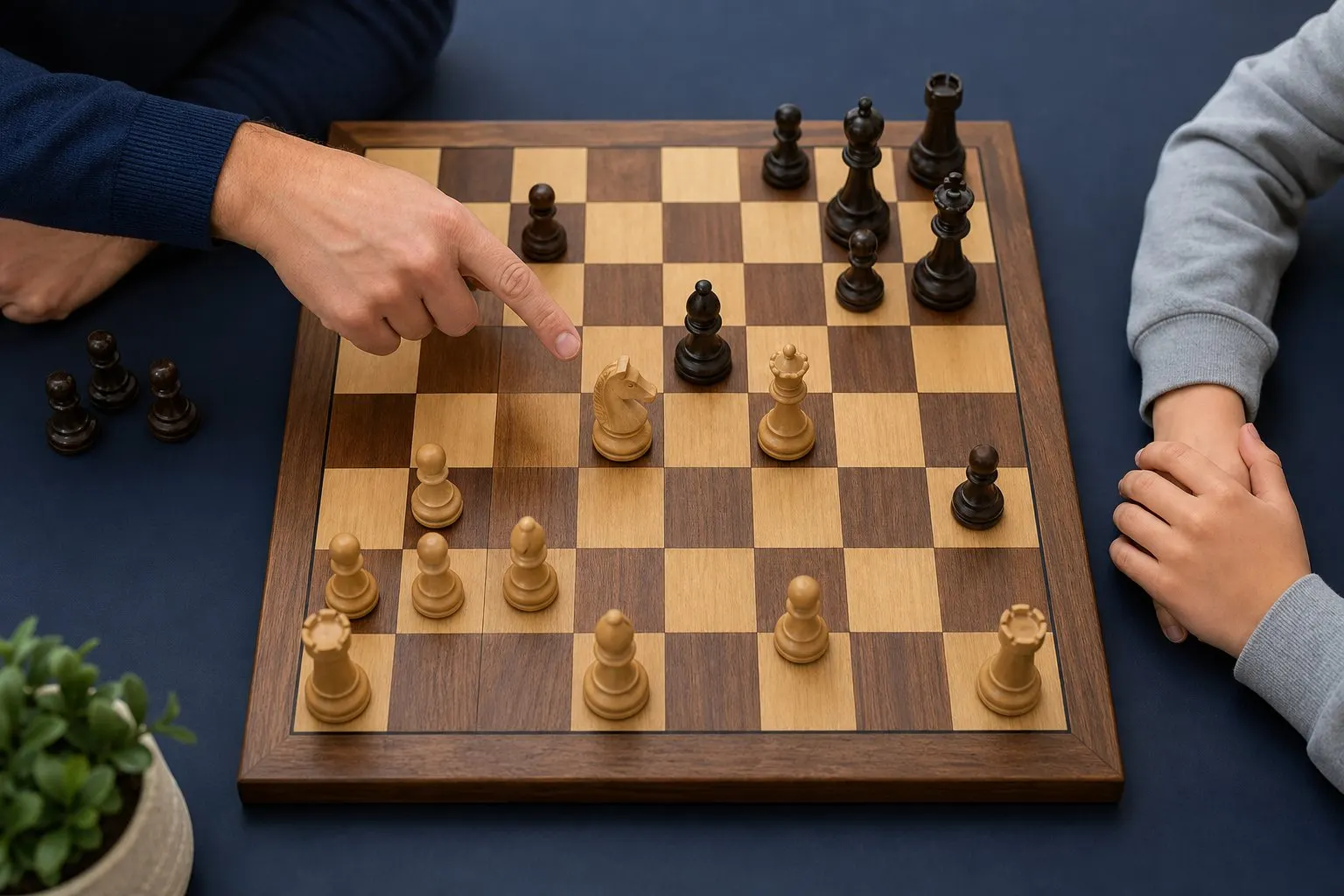
What Is a Double Attack?
The double attack is one of the most basic and most important tactical themes in chess. Simply put, it is when one piece attacks two or more of the opponent's targets at the same time, so that the opponent cannot defend all of the attacked pieces at once.
Types of Double Attack
1. The Knight Fork
The knight is the piece most often used for double attacks, because its unique way of moving allows it to attack several targets that are not on the same line or diagonal.
Classic example: a knight forking king and rook
- The knight jumps to a square where it gives check and attacks the opponent's rook at the same time
- The opponent must get out of check and cannot protect the rook
- On your next move you can safely capture the rook
Key points:
- Always keep an eye on the relative positions of your opponent's king and major pieces (queen and rooks)
- Look for squares from which your knight can attack them at the same time
- Check whether your knight will be safe on that square
2. The Pawn Fork
Although the pawn is the least valuable piece, the way it captures diagonally means it can also carry out effective double attacks.
Features:
- When a pawn advances, it can threaten two pieces diagonally at the same time
- Often used to attack two of the opponent's pieces standing next to each other on the same rank
- The opponent is forced to move one of them, and the other is captured
3. The Queen's Double Attack
The queen combines the moves of the rook and the bishop, so she can make powerful double attacks along straight lines and diagonals.
Common forms:
- Attacking the king and another major piece at the same time
- Attacking two undefended pieces
- Exploiting the opponent's pieces when they are lined up on the same line
4. Double Attacks by Other Pieces
- Bishop: threatens several targets at once along a long diagonal
- Rook: double attacks along a rank or file
- King: in the endgame, the king can also make simple double attacks
How to Spot Double Attack Opportunities
Step 1: Look for targets
- Identify the opponent's poorly defended pieces
- Pay particular attention to the opponent's king and major pieces (queen and rooks)
- Look out for two pieces of unequal value
Step 2: Look for an attacker
- See which of your pieces can attack both targets at the same time
- The knight is the most common, but don't overlook the other pieces
- Sometimes you need a preparatory move before you can make the double attack
Step 3: Check it is safe
- Confirm that the attacking piece will be safe after it moves
- Check whether your opponent has any counterattack
- Calculate the variations that follow
Defending Against Double Attacks
As well as knowing how to make double attacks, you also need to learn how to defend against them:
- Anticipate: always be alert to possible double attacks by your opponent
- Avoid: don't leave your important pieces on squares where they can easily be double-attacked
- Counterattack: if your opponent makes a double attack, see whether a counterattack can force them to abandon it
- Sacrifice: sometimes give up a less valuable piece to protect a more important target
Practice Tips
How to Improve Your Double Attack Skills
- Solve tactics puzzles: practise puzzles with the “Fork” theme on Lichess or Chess.com
- Apply it in your games: consciously look for double attack opportunities during play
- Review your games: look for the double attack opportunities you missed
- Study classic games: learn how masters use double attacks
Game Example Analysis
Example: the famous knight fork on a rook
In the following classic position, White has a brilliant opportunity for a knight fork on the rook...
Coach's Tip
The double attack is the foundation of tactical training. Once you have mastered this concept, many other tactics (such as pins and trapped pieces) become easier to understand. We recommend that students solve at least 10 related tactics puzzles every day; keep at it and your tactical vision will improve dramatically.
Next time we will look at another important tactical theme: the pin. Stay tuned!